
In Germany, more than 21 million households use gas for heating, which accounts for 49.5% of the housing stock.¹ At the same time, 39% of the new buildings constructed in 2020 were also equipped with gas heating systems.² In addition, a large number of gas stoves are in use. Using gas in the home is generally safe. The risk of a gas leak or explosion is low as long as certain precautions are followed.
Nevertheless, anyone who heats or cooks with gas should have their gas system inspected regularly and know the proper procedures to follow in the rare event of a gas leak.
Safe Handling of Gas
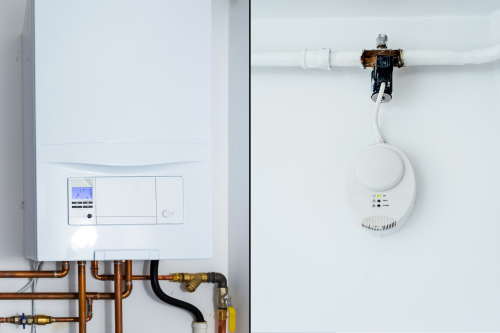
People who use a gas heating system or a gas stove in their home should make sure they know where the gas supply is located and how to shut it off. The main gas supply is usually located in the basement. It is important to regularly check that the shut-off valves are working properly and to have the gas furnace serviced annually. The landlord or building owner is responsible for maintaining the gas system.
It is also recommended to install gas detectors in living rooms, bedrooms, and the kitchen. These detectors provide early warning of gas leaks to prevent life-threatening poisoning or gas explosions.
Detecting the Smell of Gas
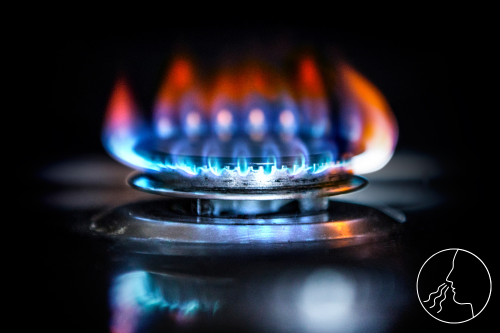
Under normal conditions, gas is odorless, tasteless, and invisible, so a gas leak would go unnoticed by people in the building. For this reason, gas suppliers are required to add an odorizing agent—that is, a substance that imparts a distinct smell—to the gas. This odor is similar to ammonia, solvents, or other chemicals. As a result, gas users can detect a gas leak by its pungent and unpleasant odor and take the appropriate steps.
Good to know: Gas network operators often offer an odor test to help you clearly identify the source of the smell.
What to Do If You Smell Gas?
If you smell gas in your home, it’s important to stay calm and act carefully to prevent a gas explosion.
Follow these steps:
- Do not use any electrical appliances.
- Alert your neighbors by knocking or calling out.
- Turn off the gas valve.
- Ventilate the building by opening the windows and doors.
- Leave the building.
- Notify the city or gas utility outside the danger zone!
Important: If gas concentrations are high, a spark or electrical current can cause a gas explosion and a fire. Therefore, if you smell gas, never use any electrical devices—including doorbells or light switches.
Do you have any questions?
¹BDEW (Federal Association of the Energy and Water Industries) (2021): Share of Energy Sources Used in 2020, URL: https://www.bdew.de/service/daten-und-grafiken/beheizungsstruktur-wohnungsbestand-deutschland/
²Federal Statistical Office (Destatis) (2021): 39% of residential buildings constructed in 2020 are heated with natural gas, URL: https://www.destatis.de/DE/Presse/Pressemitteilungen/2021/10/PD21_N060_61_44.html